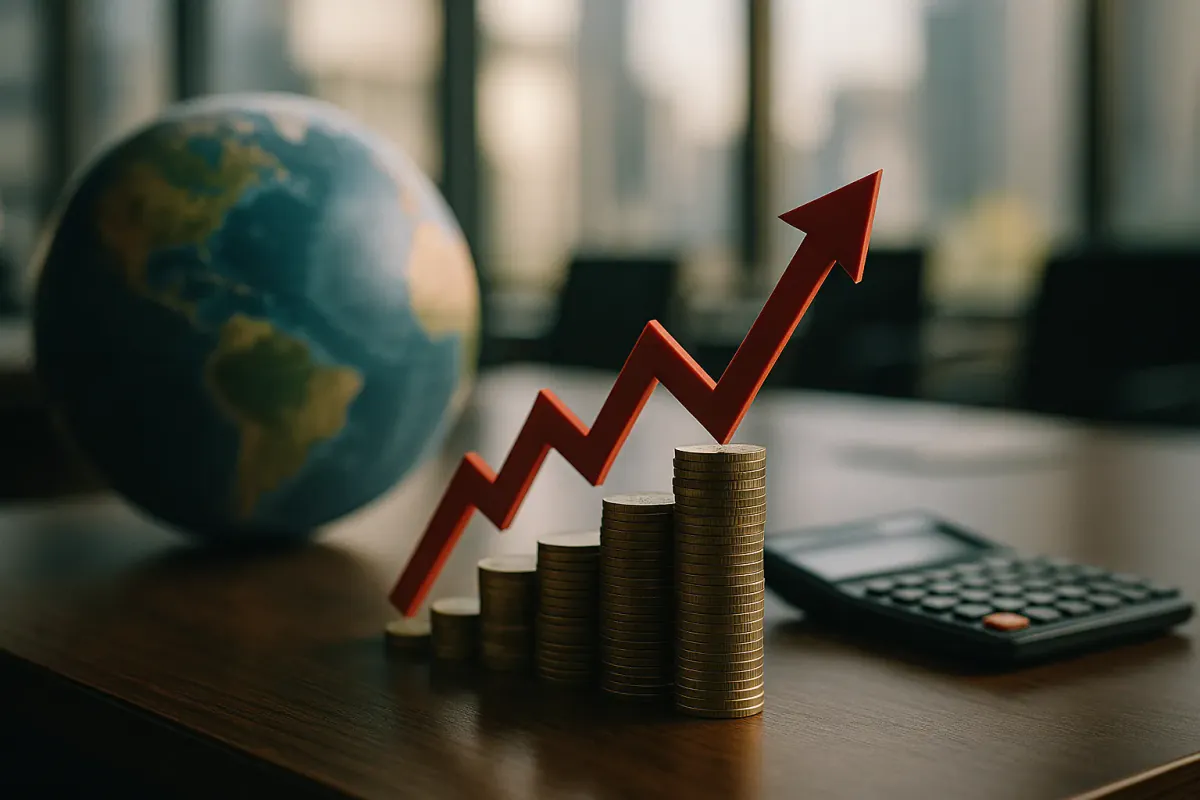
Global Economic Tensions: Inflation and Interest Rates
Worldwide inflation is creating ripples, leading to a wave of interest rate hikes spreading across economies. The impact is especially palpable in emerging markets, which are striving to maintain economic stability amid increasing external pressures.
Central Banks Respond to Inflation
Recent developments show central banks globally, from the U.S. Federal Reserve to the European Central Bank, gearing up to raise interest rates to curb inflation. The Bank of Japan is no exception, with Governor Ueda reinforcing the need to adjust rates to control rising prices. These actions come in response to persistent inflation often exceeding central banks' targets.
The direct impact of these decisions is already visible. Emerging economies, already strained by high debt levels and volatile currencies, face increased pressure. Marie Dupont, Economic Analyst at Global Insights: "Interest rate hikes fuel currency tensions and add to the already heavy debt burden in emerging economies."
Impact on Businesses and Consumers
For businesses, the rising cost of borrowing could curb investments and limit growth. Consumers, on the other hand, see their purchasing power eroded by rampant inflation. Companies must therefore navigate an environment where the cost of capital is rising while demand may weaken.
- Restricted Investment: Companies might scale back expansion plans due to higher financing costs.
- Curbed Consumption: Rising consumer goods prices reduce households' disposable income.
Emerging Markets on the Frontline
Emerging market economies, such as those in Africa and Asia, are particularly vulnerable. Their currencies are under pressure, and foreign capital might be tempted to withdraw in search of safer returns in developed economies, exacerbating economic imbalances.
Growth forecasts remain positive but modest, with GDP estimates for the second quarter hovering between 3.98% and 4.03% in some regions, as predicted by analyst Cowry Asset.
Future Outlook
With economic forecasts clouded by geopolitical tensions, notably the protracted U.S.-Iran conflict, uncertainty remains high. The OECD recently warned of potential global growth slowdowns.
For businesses and individuals, staying agile and adapting to new economic realities is crucial. Jean Martin, Economist at MarketWatch: "Economic actors must rethink their strategies to navigate this sea of economic changes."
Financial Tools for Risk Management
In this context, financial tools such as secure savings vaults and instant international transfers offered by platforms like Belook can provide solutions to manage risks and optimize resources.
In conclusion, as the world continues to grapple with persistent inflation and rising interest rates, the impact on economies and businesses will be profound and lasting. The need for adaptation and innovation has never been more pressing.