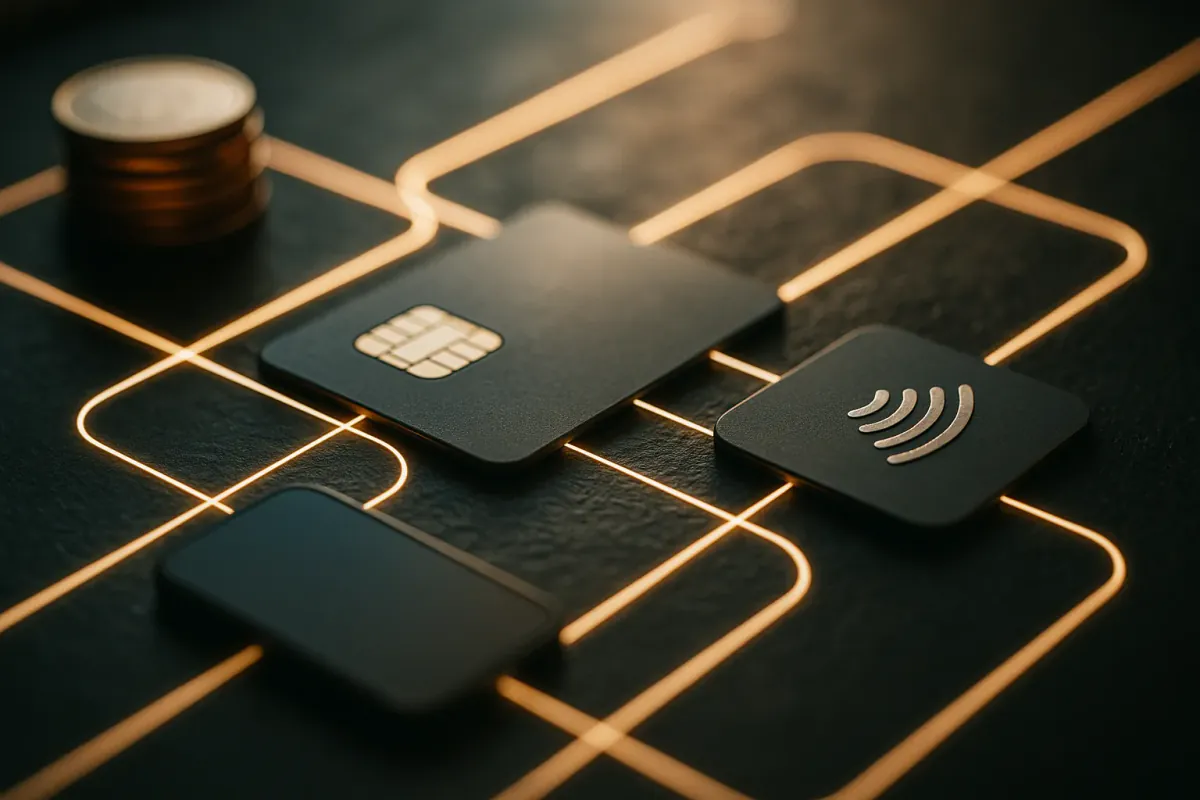
Multi-rail payments: A banking revolution underway
Multi-rail payments are transforming the digital banking landscape, enabling truly borderless transactions. As of July 2026, it becomes evident that this evolution is not merely a fleeting trend but a fundamental reshaping of how customers interact with their money.
A recent article from Finextra highlights that the future of consumer payments relies on a multi-rail approach, integrating cards, direct bank payments, and other emerging technologies. This diversification allows for increased flexibility and resilience against traditional cross-border payment obstacles.
John Smith, Financial Analyst at BankTech: "Multi-rail payments are not just a technological issue but a paradigm shift in customer-bank relationships."
Why multi-rail payments matter now
In a world where digital currencies and blockchain technologies are redefining economies, multi-rail payments offer a robust infrastructure to navigate this complexity. Analysts suggest that although the stablecoin market has shrunk by $10 billion since May, this decrease should not cause concern.
Multi-rail payments enable financial institutions to rapidly adapt, integrating tokenized payment solutions and leveraging multiple channels to secure transactions. This ensures service continuity even during economic instability.
Implications for neobanks
For neobanks, whose agility is often their main asset, adopting multi-rail payments is crucial. These platforms can thus offer faster and cheaper payment services while maintaining strict compliance with complex international regulations.
Neobanks like Belook Pay can leverage these new infrastructures to offer a seamless user experience, combining instant payments and multi-currency management, thus strengthening their position against traditional banks.
Challenges to overcome
However, multi-rail payments are not without challenges. Integrating multiple payment systems requires not only robust technological infrastructure but also international coordination among regulators.
Digital sovereignty issues, as highlighted by Finextra, become essential as banking boundaries blur. Regulators must work together to ensure that these multi-rail systems are secure and fair for all users.
What this means for you
- Faster, cheaper transactions: Multi-rail payments bypass high fees and long delays of traditional systems.
- Simplified access to international financial services: Users can send and receive money across borders without the usual complications.
- Enhanced security: Multi-rail infrastructures incorporate advanced technologies to protect user data.
In conclusion, as multi-rail payments continue to redefine the boundary between the customer and their money, they represent a significant step forward for the entire financial sector. The ability of neobanks to adapt to these new standards will determine their future success in an increasingly competitive market.