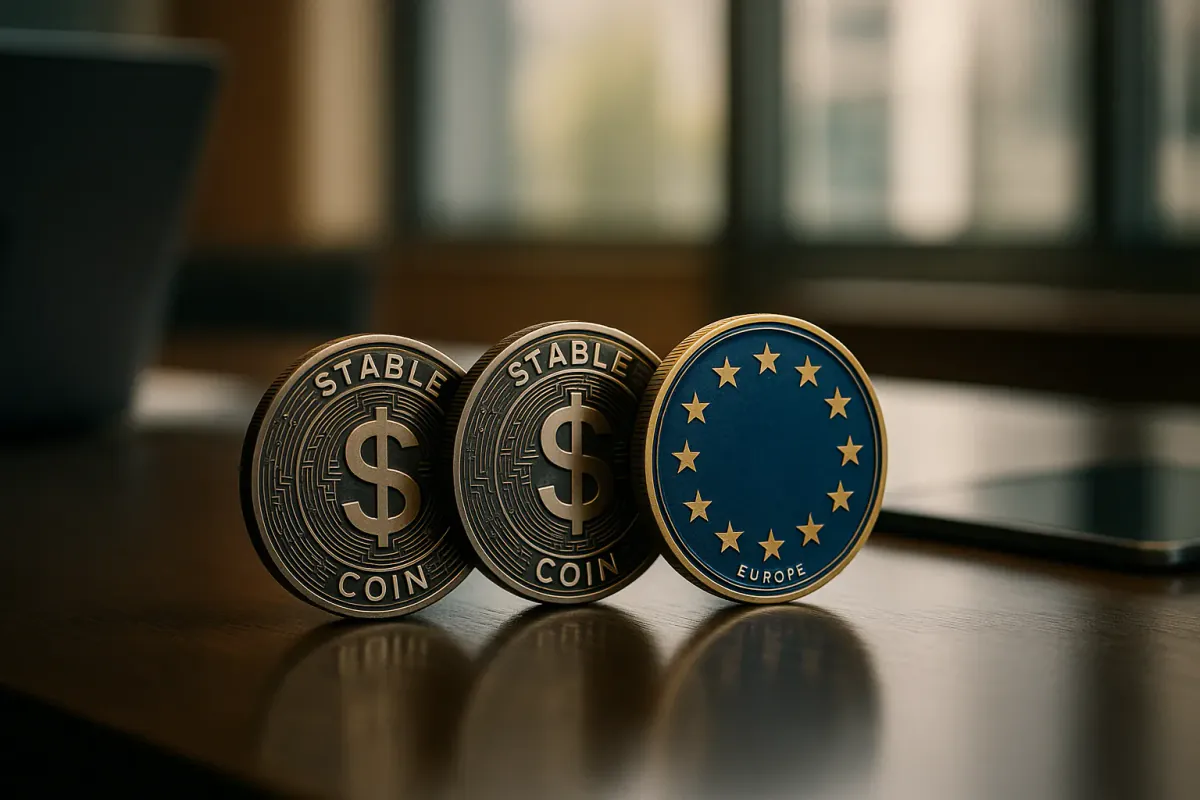
The recent move by the European Union to delist Tether (USDT), valued at $175 billion, from its authorized stablecoins under the MiCA (Markets in Crypto-Assets) regulation marks a pivotal moment in the cryptocurrency landscape. As the EU tightens its regulations to bring more transparency and stability to the market, this decision could redefine the future of stablecoins globally.
MiCA: An Evolving Regulatory Framework
The MiCA regulation, adopted by the European Union, aims to regulate cryptocurrencies and protect investors. By removing USDT from its list of authorized stablecoins, the EU sends a strong message about the importance of compliance and transparency. This decision might prompt other jurisdictions to adopt similar stances, reshaping the rules for stablecoin issuers.
Implications for the Stablecoin Market
The delisting of USDT from the European market could lead to a global reevaluation of stablecoins. Alternatives like USD Coin (USDC) or RLUSD, recently listed on major platforms such as Binance and OKX, may see increased adoption. Maria Paredes, analyst at CryptoReg Insights, states: “The EU’s decision could accelerate the shift of capital towards stablecoins perceived as safer and compliant.”
Impact on Major Players
Payment giants like Visa and Mastercard have begun exploring compliant stablecoins they could integrate into their global infrastructure. These developments reveal a trend where traditional companies seek to align with regulated digital assets. This could pave the way for broader adoption by traditional financial institutions.
Opportunity for New Entrants
The new MiCA regulation might offer an opportunity for newcomers to position themselves as leaders in the stablecoin sector. Companies that comply with the EU’s stringent standards could gain credibility and market share. It could also spur innovation in crypto asset solutions, such as those offered by Belook Pay, facilitating instant global payments.
The Role of Tokenization in Stablecoin's Future
As stablecoins evolve, the tokenization of physical assets could play a key role in their adoption. The ability to link real assets to stablecoins could offer increased stability and attract more investors. This development might transform how assets are exchanged and managed globally.
In conclusion, the EU’s decision to delist USDT from its authorized stablecoins under MiCA could be a catalyst for a global reevaluation of the stablecoin market. With the rise of stringent regulations, the impact on traditional issuers, and the opportunity for new entrants, the stablecoin landscape is undergoing significant transformation.