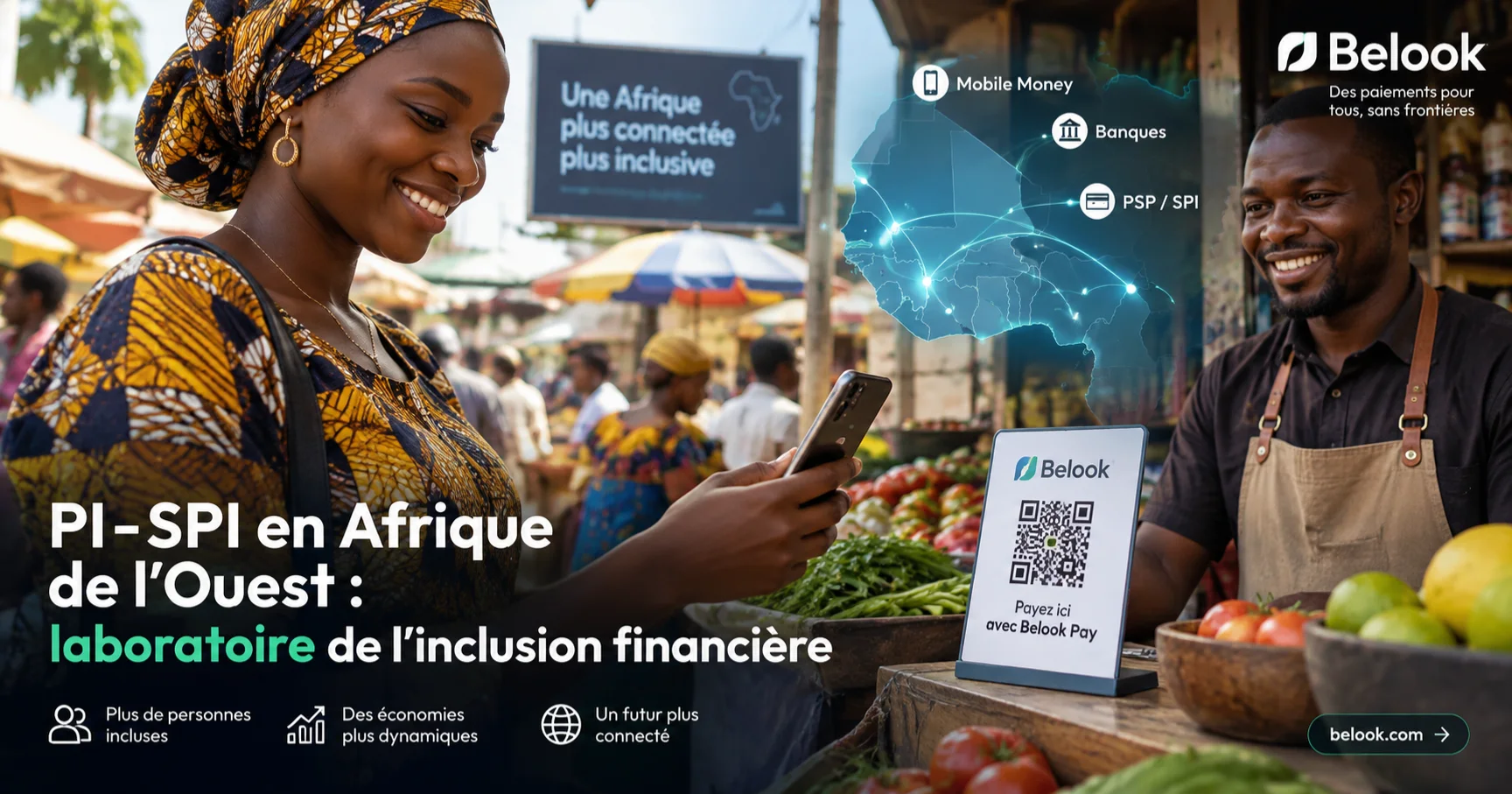
PI-SPI in West Africa: A Lab for Financial Inclusion
Four hundred million people live in West Africa. Most of them have a phone. Far fewer have a bank branch within walking distance, which is precisely why the region has become the test bed for PI-SPI in West Africa — interoperable payment systems that let money move between networks that were never designed to talk to each other.
The mechanics matter more than the slogan. When a mobile money wallet on one network can settle directly with a wallet on another, the customer no longer needs to guess which operator the recipient uses, or pay an agent to bridge the gap. That single change removes a step, and every step removed is a fee that disappears.
Finextra reported that OCR Studio and FinOn have teamed up on payments onboarding, a reminder that the plumbing behind these transfers is being rebuilt at the same time as the front end. Onboarding is where the cost curve bends. If a customer can be verified in minutes rather than days, the economics of serving a low-balance account start to work.
PI-SPI innovations aren't just closing gaps; they're redefining how we think about financial services.
The Role of Interoperability
Interoperability is the cornerstone of this success. It lets users move funds between different mobile money networks without the friction that normally eats into small transfers. The BIS has argued that interoperability can cut transaction costs materially, and in a region where every penny counts, that is not an abstraction.
Consider a trader in Accra sending the equivalent of $50 to a supplier in Abidjan. Under the old arrangement, the money might pass through two wallets, an agent and a currency conversion, each taking a slice. Under an interoperable rail, the same transfer clears directly, and the saving lands with the person who can least afford to lose it. That is the whole argument in one transaction.
Cost reduction is only half the story. Lower fees build trust, and trust builds adoption. Over 70% of transactions in West Africa are now digital, according to a recent study by the African Financial Services Institute — a figure that would have looked implausible a decade ago, when cash dominated everyday commerce.
The Role of Fintechs
African fintechs play an undeniable role in the expansion of PI-SPI. They have built around the gaps rather than waiting for traditional banks to fill them, which is why so much of the innovation sits outside the branch network. Innovation in international transfers is a case in point: fintechs compete on speed and price in a market where legacy operators have historically competed on neither.
The compliance side is catching up. Fintechs are increasingly working with international financial institutions on security and anti-money-laundering controls, because scale without those controls is not sustainable. The tension is real. Crowdfund Insider noted that Revolut and Betterment have both wrestled with onboarding and KYC processes, illustrating how hard it is to balance security, compliance and user experience at the same time.
That balancing act is not unique to Africa. It is the same problem every payments business faces, just with higher stakes when the customer has no fallback option.
Why This Matters Now
Developments in West Africa aren't confined to this region. They offer lessons that travel. Developed economies are studying these models to work out how to extend the reach and efficiency of their own payment systems, particularly for customers who have been priced out of mainstream banking.
The challenges are not trivial. Security versus access is the central trade-off, and it does not resolve itself. A system that is too open invites fraud; one that is too closed excludes the people it was built for. Getting that line right is the difference between a working rail and an expensive experiment.
There is also a macro backdrop. The Financial Times has flagged "worrying omens" for the global economy despite resilient growth, and payment infrastructure tends to be judged harshly when budgets tighten. Meanwhile, the broader digital-asset conversation keeps moving: CoinDesk reported that bitcoin traded above $84,000 even as ETF outflows continued, and Argentina's central bank ruled out near-term crypto integration into banking platforms. Different regions, different answers to the same question about who controls the rails.
What this means for you
- Easier Access: Unbanked populations can now integrate into the financial system more easily.
- Reduced Costs: Lower fees for money transfers, increasing purchasing power.
- Increased Trust: Greater adoption of mobile money thanks to secure and transparent transactions.
West Africa could well become the beacon other regions look to in their quest for financial inclusion. A development to watch closely for those interested in the future of digital payments.