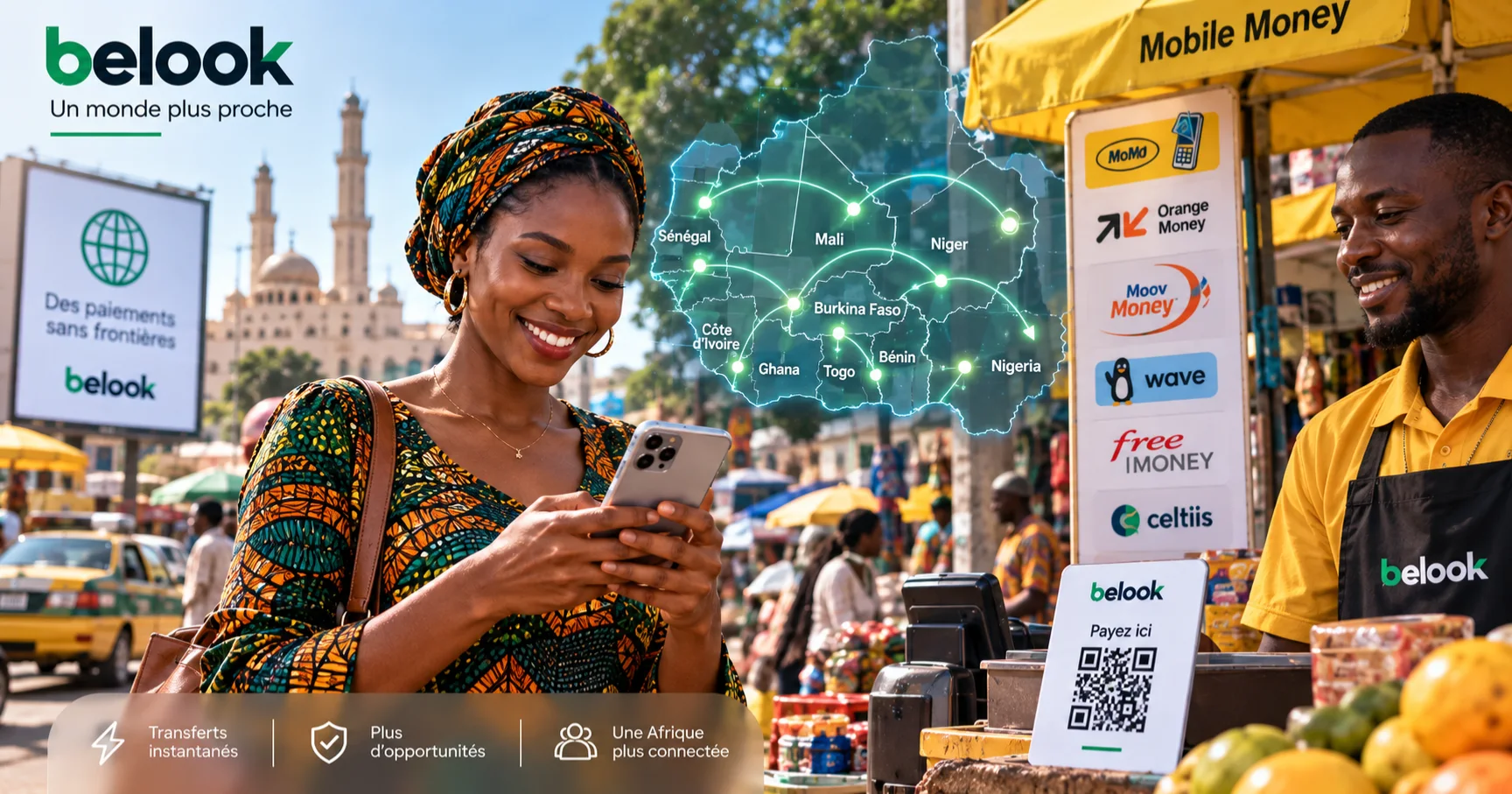
West African Mobile Money Interoperability: A Key Turning Point
On October 2, 2026, the Central Bank of West African States (BCEAO) announced a major overhaul of mobile money transaction interoperability within the West African Economic and Monetary Union (UEMOA). The reform aims to bolster financial inclusion across the region by facilitating transactions between different payment systems. According to Finextra, the measures aim to lower transaction costs and improve access to financial services for the unbanked population.
Africa's mobile money laboratory continues to lay the foundations for global interoperability.
The issue of interoperability is at the forefront for African fintechs. In West Africa, where traditional banking services are often inaccessible, mobile money has enabled many to join the formal economy. This reform could theoretically lower entry barriers even further for users.
But the mechanics matter. Interoperability means a customer of one operator can send funds directly to a customer of another, without an intermediary withdrawing cash first. The BCEAO wants to standardise the technical and commercial rules that make that possible. That's a bigger job than it sounds. Each operator has its own ledger, its own KYC checks, its own settlement schedule. Linking them requires a common messaging standard, agreed dispute procedures and a settlement mechanism that doesn't leave one side holding the risk.
Who pays for that? In most interoperability schemes, the cost is shared between sending and receiving operators, often with a small levy on the transaction. The BCEAO hasn't published a final tariff grid, but the direction is clear: the central bank wants the cost of a cross-operator transfer to look more like the cost of an on-net transfer. Today, that gap can be wide. Sending money from one network to another in UEMOA can cost several times what it costs to send within the same network.
Why Is This Reform Significant?
Mobile money service interoperability in West Africa is crucial for several reasons. Firstly, it allows users of different operators to transfer money more easily, without being limited by the technological boundaries of each service. This will encourage more fluidity in local economic transactions.
Over 60% of mobile money users in Africa rely on multiple operators for their transactions, according to a recent GSMA study. This reform aims to simplify these multi-operator processes.That statistic is the heart of the problem. If most users already juggle two or more SIMs or wallets, then the friction isn't about access to a network. It's about moving value between networks. A trader in Abidjan who receives payments on one wallet but needs to pay a supplier on another currently has to cash out and cash in, paying two sets of fees and losing time. Interoperability removes that detour.
The reform also changes the competitive dynamic. When customers can switch operators without losing the ability to transact with their existing network, operators can no longer rely on lock-in. They have to compete on price, reliability and the quality of their agent networks. That's a harder game, and it favours operators that already invest in those areas.
Potential Impact on Costs and Access
Reducing transaction costs is one of the primary goals of this initiative. Current fees for transferring money between different services can be prohibitive for many users, thus limiting the adoption of mobile money. By standardizing and simplifying these transactions, the BCEAO aims to make these services more affordable.
Additionally, interoperability could also spur innovation among service providers, who will now have to compete on user experience and service quality rather than network exclusivity.
Take a concrete example. A market trader in Dakar sends 50,000 CFA francs to a supplier in Bamako. If the two use different mobile money operators, the sender might pay a cross-network fee of, say, 2% to 3%, plus a currency conversion charge if the corridor crosses a border. On a 50,000 CFA transfer, that's 1,000 to 1,500 CFA in fees. Under a harmonised regime, the same transfer could cost closer to the on-net rate, perhaps 0.5% to 1%. The saving is small per transaction, but for a trader making several transfers a week, it adds up to real money.
For the unbanked, the effect is more subtle. Lower fees make mobile money more attractive relative to cash, but they don't automatically solve the problem of agent liquidity or network coverage in rural areas. The BCEAO's reform is necessary but not sufficient. Complementary measures, such as agent interoperability and tiered KYC, will determine whether the poorest users actually benefit.
What this means for you
- Lower transaction costs: Reduced fees for transfers between different mobile money systems.
- Improved access to financial services: Increased financial inclusion for the unbanked population.
- Enhanced innovation: More competition among mobile money service providers.
An Opportunity for Fintechs
For fintechs, this reform represents an opportunity to expand their reach in West Africa. Companies that can offer innovative solutions to leverage this new interoperability could capture a significant market share.
Platforms like Belook, which integrate diverse financial services, are well-positioned to benefit from this change. With instant international transfers and multi-currency accounts, these fintechs can offer consumers a superior user experience.
The opportunity isn't just about transfers. Interoperability creates a data layer. If a fintech can see a user's transaction history across multiple operators, it can underwrite credit more accurately, offer savings products, or provide merchant services. That's where the real margin lies. But it also raises privacy and data-sharing questions that the BCEAO hasn't fully addressed. Who owns the transaction data? Can a user port it? Those issues will shape how much value fintechs can extract.
The Future of Mobile Money in West Africa
This reform could well serve as a model for other regions worldwide seeking to enhance financial inclusion through mobile money. However, its implementation will not be without challenges, particularly in terms of securing transactions and regulatory compliance.
The real impact on the ground remains to be seen. The initial results of this reform should become apparent over the next six to twelve months, offering valuable insights into the future of financial transactions in West Africa.
One thing is already clear: the BCEAO has moved from pilot projects to a region-wide rulebook. That's a signal to operators, fintechs and investors that the central bank sees mobile money as core financial infrastructure, not a niche product. If the implementation holds, West Africa could become the first region where cross-operator mobile money works as smoothly as a domestic card payment. The rest of the world will be watching.
Sources
- Finextra — OCR Studio and FinOn partner for payments onboarding (12 October 2026)
- gsma.com