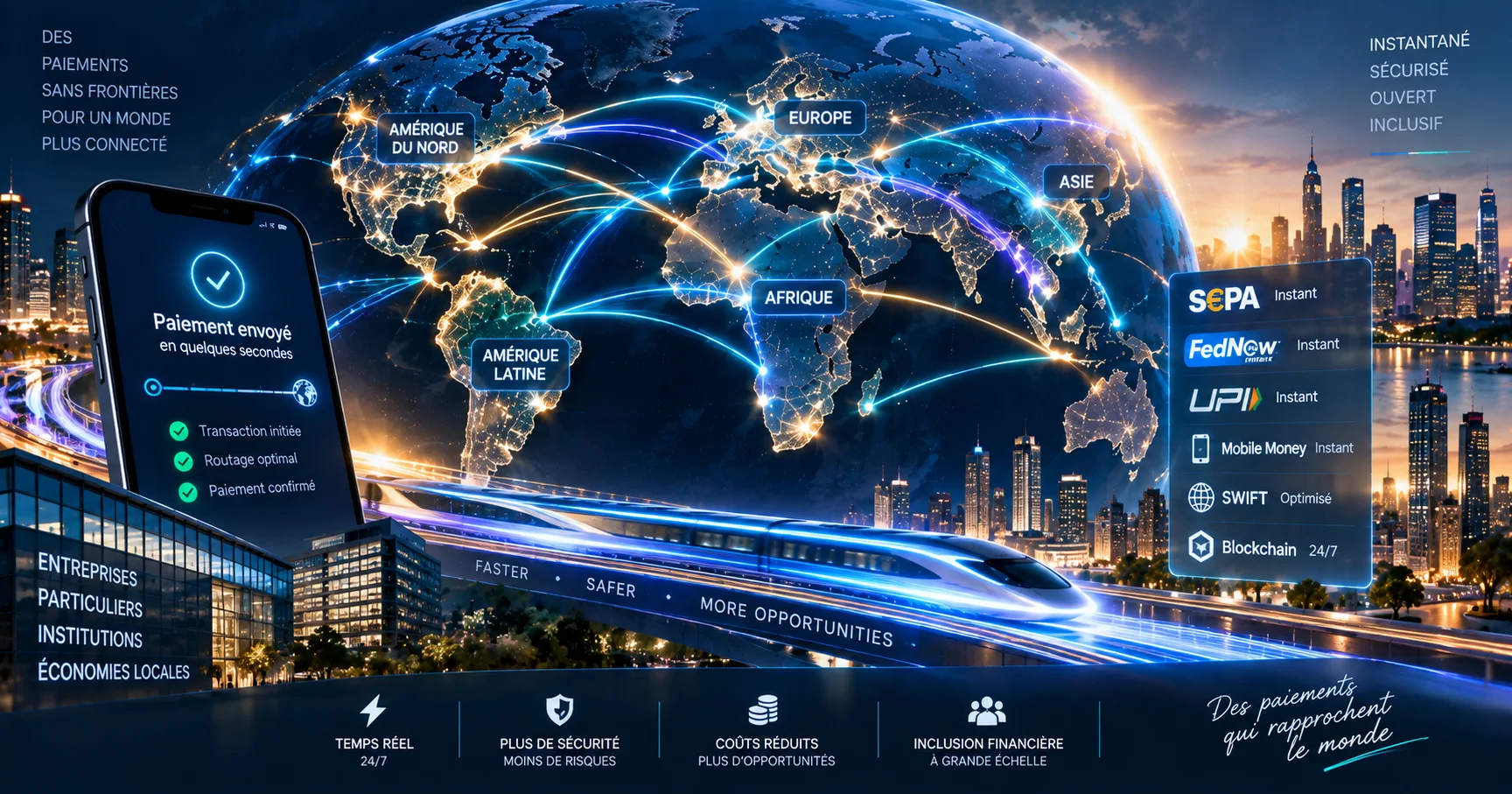
Real-time payment rails: a revolution underway
The infrastructure of payments is undergoing a radical transformation. Real-time payment rails are changing the way money moves globally. According to a recent Bank of International Settlements report, these new systems are set to significantly reduce transfer times, sometimes from several days to mere seconds. But why is this change so crucial today?
The answer is simple: the global economy increasingly demands speed and efficiency. A Finextra survey found that nearly 75% of multinational corporations view slow transfers as a major hindrance to their operations. With millions of cross-border transactions happening daily, the need for a faster and more reliable payment system is urgent.
Speed in transfers is becoming a major competitive advantage.
Why now?
The rise of real-time payments is no coincidence. It coincides with a growing adoption of financial technologies that promote interoperability and integration of banking systems worldwide. As Tearsheet highlights, the fintech empire-building era sees companies like Belook incorporating advanced features to meet rising consumer expectations. Indeed, users want instant payments, no matter where they are in the world.
Granted, challenges remain. Regulations vary from country to country, complicating the implementation of a universal solution. However, progress is being made toward harmonizing rules and fostering international collaboration.
Economic implications
The economic impact of transitioning to real-time payments extends beyond mere speed improvements. According to the Bank of International Settlements, $70 billion could be saved annually thanks to this increased efficiency. Companies could use these savings to reinvest in other areas of their business, thus stimulating economic growth.
Moreover, real-time payments offer enhanced transparency, reducing the risk of fraud and increasing consumer trust. For developing countries, this could mean strengthened financial inclusion.
Rise of super-apps
The adoption of real-time payments is also driven by the emergence of super-apps. These platforms, offering a comprehensive range of financial services, integrate ultra-fast payment solutions, enhancing their appeal to consumers. Belook, for instance, offers Belook Pay, a solution that capitalizes on this global trend.
This move toward all-in-one applications simplifies financial processes for users, making transactions both more accessible and secure.
What this means for you
- Significant time savings: international transfers now take seconds instead of days.
- Cost reduction: lower transfer fees thanks to increased efficiency.
- Enhanced security: better traceability and less risk of fraud.
With such advantages, keeping an eye on future developments is crucial. In particular, changes in international regulations could either accelerate or slow down this shift.
To remain competitive in this rapidly evolving environment, it is essential for businesses and consumers to embrace these new technologies swiftly.
For more insights, check out our dossier on international transfers.