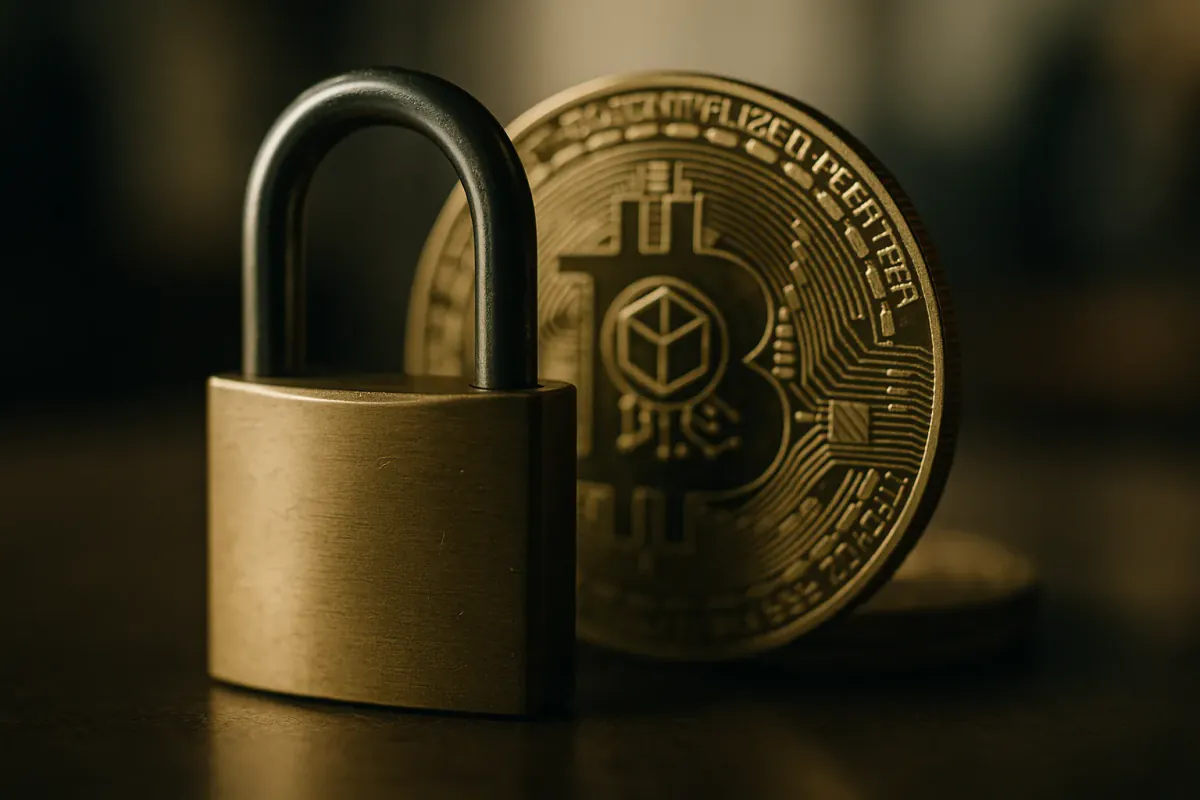
Bitcoin is hovering near $80,500 ahead of the US midterms and a Federal Reserve decision, Bitcoin Magazine reports. But the number that matters this week isn't a price. It's a quiet recall notice: Keystone, a hardware wallet maker, is pulling devices because a stolen key could open the door to undetectable fakes, according to Decrypt. That's the 2026 paradox in one sentence. Crypto self-custody has never been more popular, and never more fragile at its physical links.
Crypto self-custody is the weak link in trust
Holding your own keys means holding your own responsibility. The Keystone recall makes that brutally concrete: a wallet's security doesn't live only in its code, but in its supply chain. An attacker who obtains a signing key can inject tampered firmware into enclosures that look genuine. The user sees nothing.
The same week, the Lightning Foundation tightened its invoice rules after a reported attack that made bitcoin withdrawals look unpaid, per CryptoSlate. Again, the risk isn't in the blockchain. It's in the interface that translates the blockchain into something a human can read.
Two separate incidents, one lesson: self-custody moves risk from the custodian to the device and the interface.Robinhood shows crypto alone no longer makes a quarter
The counterpoint comes from public markets. Robinhood posted record revenue in Q3, yet its crypto revenue fell 55% year on year while still beating Wall Street forecasts, according to CoinDesk. The group missed earnings consensus, Decrypt notes, and its in-house chain brought in $26 million, per The Block.
Read those lines together. Crypto is no longer the growth engine of a consumer fintech: it has become one product among others, sitting next to prediction markets and securities lending. Robinhood is also folding in Ripple's stablecoin and treasury software, again per Decrypt. Translation: the platforms making money aren't just selling bitcoin anymore. They're selling rails.
The real crypto product of 2026 isn't the coin. It's the pipe that moves it without you handing over your keys.
Stablecoins: the dollar defends itself through rails, not price
Treasury Secretary Scott Bessent sees crypto as a tool for keeping the dollar on top, CoinDesk reports. That tracks with what we see on the ground: Anchorage is positioning itself as the custody backbone of the US–Mexico stablecoin corridor, per Decrypt.
A corridor. Not a market. The wording is telling: a stablecoin's value isn't measured by market cap but by the volume of real payments it moves between two economies that trade heavily. Mexico sends and receives enormous remittance flows; the digital dollar becomes a treasury tool for businesses there, not a speculation.
Still, caution is warranted. A dollar-backed stablecoin is a claim on an issuer. If you don't hold your keys, you hold a promise. If you do hold your keys, you hold the responsibility for the key. Both models carry a cost, just not the same one.
What this means for you
- Check where your hardware came from. A wallet bought on a third-party marketplace is a tampered-firmware risk. Buy direct from the maker and watch recalls, like Keystone's.
- Treat a Lightning invoice as information to verify. Since the rules tightened, an invoice showing "unpaid" deserves a check before you resend a payment.
- Separate custody from usage. You can pay, top up, buy, sell and swap without surrendering your keys: that's the logic of an integrated crypto account such as the one described on Belook Crypto, where holding stays on your side while the rails do the work.
The trade-off nobody wants to name
Granted, one point to the platforms: for the vast majority of users, delegated custody remains safer than misunderstood self-custody. A user who loses a recovery phrase has lost their money; a user who entrusts assets to a regulated custodian has recourse. Which is why "your keys or nothing" is a slogan, not a strategy.
The real question sits elsewhere: where do you put the cursor between the convenience of an integrated account and control of your keys? Our answer, as a desk, is that you need both, and the architecture now allows it. A multi-currency account built on stablecoins, with instant payment rails, can serve as your daily interface without ever exposing your private key. That's the point of our crypto and stablecoins hub: the durable promise isn't total decentralization, it's fewer intermediaries between you and your money.
The next test: November
Two dates to watch. First, the US midterms, which will shape prediction-market regulation and, by extension, how crypto platforms structure their products. Then the Fed decision, which sets the opportunity cost of holding bitcoin instead of cash. Between the two, one figure: $26 million. That's what Robinhood's chain earns in a quarter, less than some stablecoin corridors move in a week. The fight is no longer over bitcoin's price. It's over the rails, and who holds the key at the end of them.
Sources
- Bitcoin Magazine — Bitcoin Price Rests Near $80,500 as Midterms, Fed Decision Loom (27 October 2026)
- Decrypt — Bitcoin Wallet Maker Keystone Pulls Devices as Stolen Key Opens Door to Fakes (27 October 2026)
- CryptoSlate — Lightning tightens invoice rules after reported attack made Bitcoin withdrawals look unpaid (27 October 2026)
- CoinDesk — Robinhood's crypto revenue fell 55% from last year, but topped Street forecasts (27 October 2026)
- Decrypt — Robinhood Misses Q3 Earnings as Crypto Revenue Rises and Prediction Market Bets Grow (27 October 2026)
- The Block — Robinhood Chain brings in $26 million as crypto revenue rises 20% in Q3 (27 October 2026)
- Decrypt — Robinhood Taps Ripple's Stablecoin, Treasury Software and Trading Loans (27 October 2026)
- CoinDesk — Treasury's Bessent sees crypto as America's next tool for keeping the U.S. dollar on top (27 October 2026)
- Decrypt — Anchorage Positions Itself as Custody Backbone of US-Mexico Stablecoin Corridor (27 October 2026)