A polite warning that changes the terms
Bank of America said it kindly, and that's what makes it interesting. Late last month the US lender asked customers not to hand their banking password to an AI assistant, as TechCrunch Fintech reported. The bank isn't banning chatbots. It's refusing to let them hold the keys.
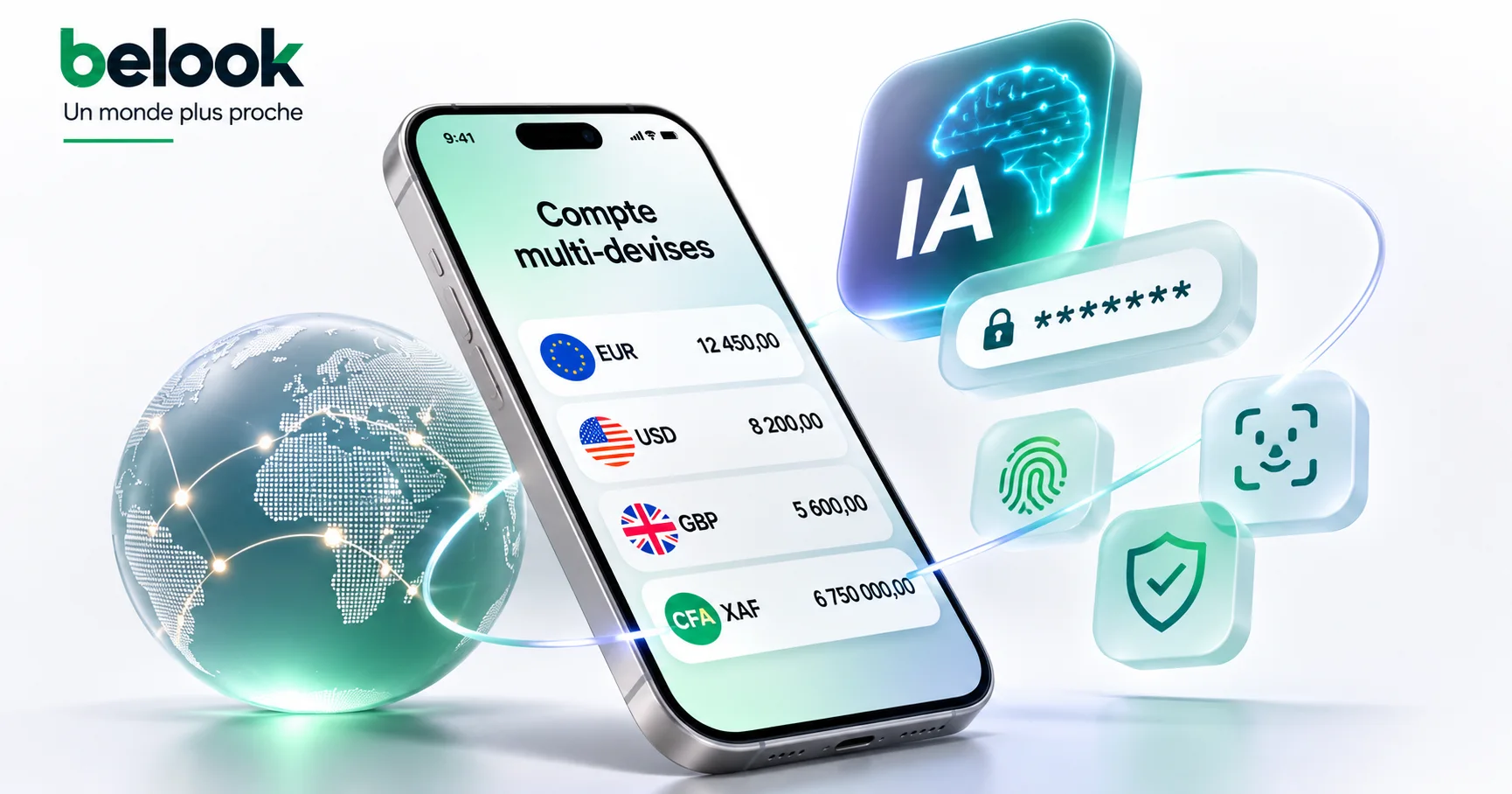
That sentence lands hardest on the multi-currency account, the product now sitting at the centre of the argument. A wallet holding euros, dollars and West African francs, paying subscriptions abroad and receiving transfers from three continents, is exactly where automated agents want to operate. It's also the account whose compromise costs the most.
The multi-currency account is the agent's front door
The plumbing is further along than most people assume. On 23 October the GSMA, which represents mobile operators worldwide, published a note on the NANDA index, an effort to connect the mobile world to an open agentic web, according to the GSMA. In plain terms: the rails that will let an AI agent book, buy and pay from a phone are being standardised now.
Two days later the Bank of England set out how it will accept tokenised collateral in central clearing, per the Bank of England. Read that as a signal, not a technical footnote. Settlement infrastructure is preparing for programmable assets, which means instructions issued by machines.
The account is migrating from the branch to the API. And the API has never seen your face.What compliance cannot yet arbitrate
Here's the part the commentary keeps missing. Neobanks built their reputation on two promises that pull in opposite directions: openness (open an account in eight minutes, from anywhere) and safety (identity checks, flow monitoring, anti-money-laundering rules). The AI agent pushes exactly where that tension hurts.
Delegated access means a third party logging in with your rights, from an unfamiliar address, at three in the morning, for an unusual amount. Fraud engines were never trained to tell a legitimate agent from a hijacked one. The distinguishing feature is something nobody models yet: the delegation itself.
Granted, it would be wrong to read this as banks slowing AI down. Bank of America isn't saying no to automation. It's saying no to shared secrets. That's an engineering distinction, not a philosophical one: what's needed are time-limited access tokens, capped amounts, one-tap revocation, and a log the customer can actually read.
Russia's precedent: when the state opens the door
Almost simultaneously, Russia's central bank cleared seventeen crypto exchange platforms while Sberbank and VTB prepared retail trading, DL News reported. The parallel isn't decorative. It shows that regulators who choose to license rather than ban move the risk to the interface. The vault matters less than the doorway.
A modern multi-currency account inherits that lesson. Its worth no longer sits in how many currencies it displays, but in how finely it can slice permissions: one ceiling for the assistant, another for a payment mandate, a third for an international transfer. Belook's multi-currency account hub frames the shift well: currency becomes a setting, permission becomes the product.
An account without borders is only worth something if every internal border can be renegotiated by the second.
Access, not currency, is the product now
The numbers are blunter than the slogans. The GSMA secured US$1.2 million to strengthen mobile-enabled early warning systems across the Pacific, according to GSMA. It's also pushing for cheaper smartphones in Gabon, where network coverage exists but access doesn't, per the same organisation.
More than half of Gabon's population lives under mobile coverage but never reaches mobile internet, per the GSMA.Both releases say one thing from two angles: access to an account isn't a technical given, it's an economic and political decision. An AI agent managing your money assumes a smartphone, a data plan and a verified digital identity. Millions of customers still lack all three.
That's where the borderless pitch deserves to be turned around. A neobank promising the world should first guarantee the customer keeps hold of their own account while delegating. Otherwise openness becomes a marketable vulnerability.
NextBillion put it starkly in its 2026 review: financial inclusion is entering a phase of harder choices, according to NextBillion. The easy growth is behind us. Quality of access becomes the filter.
What this means for you
- Separate the keys from the account. Never give a primary login to an assistant. Ask for delegated access that's capped, time-limited and revocable, with a readable activity log.
- Check what the agent can see. A total balance and a full statement are different permissions. A properly configured multi-currency account hides per-currency detail from third parties.
- Keep an offline recovery path. If access runs through a phone, know today how you reclaim the account when that phone is gone.
One date to watch: 11 November, when MSCI rules on Strategy's index fate, as DL News notes. Another case of the same question, who decides what a financial vehicle may hold. Your own accounts won't wait for the press release.
Sources
- TechCrunch Fintech — Bank of America kindly asks that you don’t share your banking password with your AI assistant (27 October 2026)
- GSMA — NANDA Index: Connecting the Mobile World to the Open Agentic Web (23 October 2026)
- DL News — Bank of Russia clears 17 crypto exchangers as Sberbank and VTB ready retail trading (22 October 2026)
- GSMA — GSMA Secures US$1.2 Million To Strengthen Mobile-Enabled Early Warning Systems Across the Pacific (28 October 2026)
- GSMA — GSMA Calls for More Affordable Smartphones as Over Half of Gabon’s Population Remains Off Mobile Internet Despite Network Coverage (29 October 2026)
- NextBillion — Harder Choices Ahead: What the Financial Inclusion Compass 2026 Tells us About the Sector’s Shifting Challenges (26 October 2026)
- DL News — Strategy’s MSCI risk: What to watch before November 11 (28 October 2026)